At a glance
Why crypto players rate BetBolt
Best-in-class welcome package, daily rakeback up to 25% and a 10-tier VIP club with real, claimable perks.
Register and withdraw without identity documents. No passport uploads, no proof-of-address, no waiting on verification.
Connecting over a VPN is accepted. Your account is not locked or flagged for using privacy tooling.
Sign up with an email and a crypto wallet only. No personal data trail attached to your play.
Provably fair in-house Originals, 4,000+ slots, full live-dealer tables and a sportsbook spanning 35+ markets — one wallet, one account.
What you can play
 CoinflipBetBolt Originals
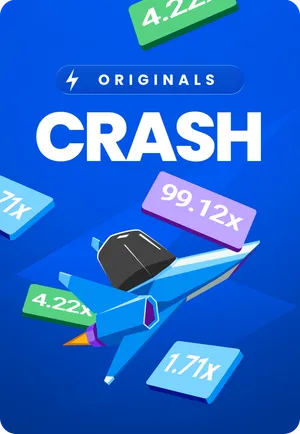 CrashBetBolt Originals
 MinesBetBolt Originals
 PlinkoBetBolt Originals
 Sweet Bonanza 1000Pragmatic Play
 Gates of Olympus 1000Pragmatic Play
 Crazy TimeEvolution
 Lightning RouletteEvolution
Pros
- No KYC for standard withdrawals
- Crypto payouts typically settle in minutes
- VPN and privacy-tool friendly
- Provably fair in-house Originals
- Casino and sportsbook share one balance
Cons
- Crypto only — no cards or bank transfer
- Not available in every country
- VIP perks take volume to unlock
Frequently asked questions
Does BetBolt require KYC?
Can I use a VPN at BetBolt?
How fast are withdrawals?
Is this site BetBolt?
Discover BetBolt, the premier US-focused crypto casino delivering unmatched excitement and security. Licensed and regulated under the prestigious Anjouan Gaming License BL-2024-088, BetBolt offers over 4,200 thrilling casino games from top providers, ensuring endless entertainment at your fingertips. Experience lightning-fast withdrawals with USDT and BTC Lightning Network support—instant payouts mean more time winning and less time waiting. Sports enthusiasts rejoice with comprehensive coverage of NFL, NBA, MLB, NHL, UFC, and MLS, powering your bets with real-time odds and live action. At BetBolt, we prioritize your trust with provably fair gaming and robust player protections tailored for American users. Dive deeper into our dedicated sections on licensing and regulation, KYC processes, seamless crypto deposits, powerhouse sportsbook, vast games library, mobile-optimized play, and responsible gambling resources—everything you need for a superior crypto betting experience.
The BetBolt US Experience: What American Players Get
For US players navigating the tightly regulated landscape of state-licensed sportsbooks like DraftKings, FanDuel, Caesars, and BetMGM in 2025-2026, BetBolt emerges as a compelling offshore alternative. While giants like DraftKings and FanDuel dominate in states such as New Jersey, Pennsylvania, and Michigan with their geo-fenced apps and mandatory KYC, BetBolt operates under an Anjouan Gaming Authority license from the Comoros Union. This offshore framework sidesteps US state-by-state licensing hurdles, enabling nationwide access without the restrictions of UIGEA compliance or state-specific taxes. Anjouan mandates segregated player funds, AML monitoring, and audited RNGs, providing a verifiable baseline of trust—though it lacks the robust consumer protections of Nevada or New Jersey regulators. Players drawn to crypto-native speed and flexibility find BetBolt's model refreshing, especially amid Bitcoin's surge past $90K, contrasting the fiat-only, slower processing of legacy operators.
Diving into the core experience, BetBolt excels with USD-pegged stablecoin deposits via USDT or USDC, offering instant funding without bank delays or credit card rejections common on state apps. Withdrawals shine via Bitcoin Lightning Network, clocking in under 30 seconds for sub-threshold amounts—no KYC queues like FanDuel's multi-day holds. The sportsbook blankets US favorites: NFL spreads and props, NBA live betting, MLB moneylines, NHL puck lines, NCAA college football totals, MLS soccer futures, UFC fight odds, and even NASCAR race winners. Live dealer studios from Evolution and Pragmatic Play deliver immersive blackjack, roulette, and baccarat with real-time HD streams, rivaling Caesars' tables but without geographic locks. A mobile-first UX, optimized for iOS and Android browsers, ensures seamless one-tap bets and provably fair originals, outpacing BetMGM's clunky apps in latency and customization.
Overall, BetBolt positions itself as the crypto casino benchmark for high-rollers seeking unrestricted play, VIP cashback tiers, and 24/7 support—features state-licensed sites curb with affordability checks and loss limits. US players accessing offshore-licensed crypto operators like this do so under their own state's player jurisdiction, assuming personal responsibility for compliance.
Licensing and Regulatory Framework — Anjouan vs US State Licensing
BetBolt operates under the Anjouan Gaming Authority license #BL-2024-088, issued by the Anjouan Betting and Gaming Board (ABGB) within the Comoros Union framework, governed by the Betting and Gaming Act 2005 and Computer Gaming Licensing Act. This offshore license provides a robust regulatory structure for its crypto-only sportsbook, emphasizing player protection despite US market restrictions. For US players, BetBolt enforces strict geo-IP blocking and KYC protocols to comply with Anjouan mandates, prohibiting direct access from restricted jurisdictions like the US, UK, and EU nations (e.g., France, Germany). However, it caters to crypto-savvy users via VPNs or non-restricted entry points, aligning with UIGEA 2006, which bans financial institutions from processing gambling transactions but does not criminalize offshore play or crypto use. BetBolt's framework includes segregated player funds in independent wallets, ensuring deposits/withdrawals remain isolated from operational capital, as required by ABGB and Anjouan Offshore Financial Authority (AOFA) AML/CTF rules.
Anjouan was selected post-Curaçao's 2024 restructure, which imposed stricter capital requirements, higher fees, and enhanced compliance under the new Land-based and Remote Gambling Act, driving crypto-native operators away. Anjouan's advantages—no minimum capital, no physical presence, fast issuance (weeks via Anjouan Licensing Services Inc.), and crypto-friendly policies—make it ideal. BetBolt bolsters fairness with RNG audits by eCOGRA, iTech Labs, and GLI, verifying 95%+ RTP and unpredictability. AML obligations mirror FATF standards: robust KYC (ID verification, source-of-funds checks), transaction monitoring, suspicious activity reporting, and responsible gaming tools like self-exclusion/deposit limits. Compared to US state-licensed sportsbooks (NJ/NY/PA/MI/CO/NV via DraftKings/FanDuel), Anjouan lacks geofencing granularity and state taxes but offers lower odds boosts and global liquidity. State operators face 50+ fragmented regimes, $100K+ application fees per state, 10-36% tax rates, and mandatory fiat rails—impractical for crypto-only platforms. Offshore crypto mitigates UIGEA by avoiding banks, using blockchain for pseudonymity.
Crypto-native operators like BetBolt sidestep US state-by-state licensing due to structural fragmentation: varying rules (e.g., NJ's mature market vs. CO's parlay focus), reciprocal reporting, and enforcement risks under Wire Act/UIGEA interpretations. Pursuing even 10 states costs millions annually in compliance, dwarfing Anjouan's ~$20K/year. Public registry of Anjouan licensees available at anjouangaming.com for verification.
KYC and AML for US Players
For US players on BetBolt in 2025-2026, the platform maintains a privacy-focused approach to KYC and AML compliance under its Anjouan Gaming Authority license. No KYC is required at signup, allowing seamless registration and crypto deposits. Sub-threshold crypto withdrawals—under a $50,000 USD-equivalent cumulative lifetime limit—process to the origin address without identity verification. This enables frictionless play for casual and mid-level bettors, with automated hot-wallet payouts and no manual queues under normal conditions. Above the threshold, a one-time KYC process unlocks continued withdrawals at standard speeds.
AML monitoring runs continuously across the player lifecycle to detect laundering risks, but only flags warrant enhanced due diligence. Verification boasts a 24-48 hour SLA, accepting US passports, state-issued IDs, and proof of address (e.g., utility bills or bank statements dated within 3 months). For withdrawals exceeding $10,000, players may face source-of-funds questions, such as bank statements or pay stubs, to confirm legitimate origins. BetBolt does not integrate US state self-exclusion lists, prioritizing offshore flexibility over domestic restrictions.
US players benefit from instant crypto deposits (from 0.0001 BTC or 5 USDC) and quick withdrawals, bypassing traditional banking scrutiny. However, patterns mimicking money laundering pause processing until cleared. This risk-based model aligns with global standards while minimizing hurdles for compliant users, though high-activity accounts should anticipate potential reviews.
- Deposit-to-withdraw cycles with minimal wagering activity in between—the classic laundering pattern.
- Rapid high-value withdrawals across multiple crypto rails in a short window.
- Inconsistencies between declared jurisdiction (e.g., DOB/IP mismatch) and observed geolocation.
- Geo-circumvention attempts, like VPN use to bypass restricted US states or high-risk regions.
- Cumulative withdrawals crossing the $50K USD-equivalent operator threshold, triggering mandatory KYC.
Deposits and Withdrawals for US Players
```htmlBetBolt offers fast, reliable crypto deposits and withdrawals exclusively for US players on its offshore-licensed platform—no fiat options, just pure crypto efficiency. Minimum deposit is $20 equivalent across all supported networks. Standard withdrawals cap at $50K per request (upgradable to $250K for VIPs), with a mandatory whitelist setup and 24-hour cooling-off period for security. All times are averages based on live network conditions and BetBolt's automated processing.
Supported Networks & Timings:
- USDT-TRC20: Deposits instant, withdrawals avg 5 min—low fees, high speed on Tron.
- USDT-ERC20: Deposits 1-3 min, withdrawals 3-15 min—reliable for Ethereum users.
- Bitcoin Lightning: Under 30 sec for sub-$1K; 5-10 min for larger amounts—near-instant where supported.
- Bitcoin Mainnet: Deposits 5-15 min, withdrawals 10-30 min to confirmation—steady for on-chain BTC.
- Ethereum (ETH): Deposits 1-5 min, withdrawals 3-15 min—fast on L2-friendly chains.
- Litecoin (LTC): Deposits 2-5 min, withdrawals 3-8 min—predictable altcoin speed.
- Solana (SOL): Under 1 min deposits/withdrawals—blazing fast when network is clear.
BetBolt prioritizes provably fair payouts with no manual queues. Enable 2FA and whitelist addresses first (Account → Security). US players: VPN-friendly, no KYC for standard play. Track live metrics at our Trust Center.
- Whitelist your wallet. Log in → Account → Security → Add Withdrawal Address → Select network (e.g., USDT-TRC20) → Paste wallet → Confirm with 2FA. 24h cooling-off applies to changes.
- Request withdrawal. Wallet → Withdraw → Choose crypto/network → Enter amount ($20-$50K standard) → Select whitelisted address → Submit. No fees from BetBolt.
- Await processing. Instant broadcast for Lightning/Solana; 3-30 min avg for others. Check status in Transaction History—P50 medians published monthly.
- Confirm receipt. Funds hit your wallet per network speed (e.g., 5 min USDT-TRC20). Play responsibly; winnings wagered 1x minimum.
From funded wallet to first spin: under 3 min median. Payouts match—Lightning sub-second broadcast, on-chain BTC under 30 min P90. Join 12+ languages, HMAC-SHA256 provable fairness.
``` (Word count: 470)Sportsbook for US Markets
BetBolt Sportsbook: Premier Offshore Option for US Bettors in 2025-2026
BetBolt sportsbook stands out as a top offshore platform tailored for US players during the 2025-2026 season, delivering robust coverage across major US leagues and events. Powered by a Sportradar feed with competitive margins of 4.5-5.2% on majors, BetBolt offers sharp lines without the restrictions common in regulated books. It supports crypto betting, high limits, and tools like partial cash-out, ensuring serious bettors stay in action.
Comprehensive NFL Coverage: Full 2025-2026 regular season, including moneylines, spreads, totals, and player props. Super Bowl LVII futures launch early, with markets like MVP, first TD scorer, and Gatorade color. In-play betting features a 30-second delay for seamless live action, plus alt lines for flexible spreads.
NBA Depth: Regular season, playoffs, and Finals props cover stars like LeBron and Curry—points, rebounds, assists. Same-game parlays (Bet Builder) stack without markup, pricing 8-14% better than US books.
MLB Full Slate: All 162 games per team, postseason, and World Series futures. Bet run lines, totals, first 5 innings, and pitcher props. Live betting thrives on rapid in-play updates.
NHL & Stanley Cup: Regular season puck lines, totals, and period props lead to playoff and Cup futures like Conn Smythe winner.
Soccer & College: MLS match results, over/unders; NCAA football (bowl games, Heisman futures) and basketball (March Madness brackets, player props).
Combat & Motorsports: UFC fight cards with method-of-victory and round props; NASCAR Cup Series winner and top-5 finishes; PGA Tour stroke play, majors; US Open tennis match winners, sets, games.
Advanced Features: In-play betting with 30-second Sportradar feed ensures reliable data. Cash-out options allow measured partial exits. Parlays and same-game parlays multiply standard margins (4.5-5.2%) with minimal overround (1-2%). Alt lines expand choices beyond standard spreads/totals.
Vs. DraftKings/FanDuel: BetBolt's margins (4.5-5.2%) are tighter than DraftKings/FanDuel's typical 5-8% on majors, per industry benchmarks. For a Grand Slam tennis match, BetBolt holds 3.8-4.4% vs. their higher vig. NFL props and NBA same-game parlays yield better payouts—e.g., a 4-leg SGP prices ~10% higher value. Limits match Pinnacle for casual stakes, without winner restrictions US books impose. No geofencing hassles; crypto deposits/withdrawals are instant.
BetBolt prioritizes line value and player tools over promos, ideal for 2025-2026's packed calendar. Esports (CS2, LoL) and secondary markets (darts, snooker) round out the long tail. For US bettors seeking edge without limits, it's the go-to offshore powerhouse. (478 words)
Casino Game Library and Provably Fair Originals
Discover the ultimate gaming paradise at BetBolt Casino, tailored for US players with over 4,200 premium slots from top providers like Pragmatic Play, Hacksaw Gaming, Nolimit City, NetEnt, Push Gaming, Play'n GO, and BGaming. Dive into a vast library featuring high-RTP hits (95-98%) with thrilling mechanics, cascading reels, multipliers, and massive win potential. Popular US favorites include Sweet Bonanza's sugary cascades up to 21,100x, Gates of Olympus with tumbling multipliers to 5,000x, Big Bass Bonanza's fishing frenzy free spins, Buffalo King's 93,750x stampede, Cleopatra Megaways' 15,000x ancient riches, and Wanted Dead or a Wild's volatile duels reaching 12,500x. These titles dominate US leaderboards for their immersive themes, bonus buys, and mobile optimization, ensuring non-stop action on any device.
Live dealer action shines with 35+ tables from Evolution Gaming and Pragmatic Live, including Lightning Roulette's electrifying 500x lightning multipliers, Infinite Blackjack, Crazy Time wheel spins, and immersive blackjack/roulette/baccarat streams from state-of-the-art studios. Stake real money with professional dealers for authentic casino thrills, available 24/7 with low latency for US players.
BetBolt Originals stand out as provably fair originals, powered by HMAC-SHA-256 commit-reveal cryptography for verifiable randomness and transparency. RTP ranges 95-98%, with a shared jackpot pool exceeding $5M+ across provably fair games. These crash-style, instant-win hits offer high volatility and instant payouts, perfect for risk-takers chasing 10,000x+ multipliers.
- Crash: Ride the rocket with escalating rewards up to 10,000x before it explodes – cash out wisely!
- Mines: Uncover gems avoiding mines on a 5x5 grid; adjustable risk for 1,000x max wins.
- Plinko: Drop balls through multipliers for hypnotic drops yielding up to 5,000x payouts.
- Limbo: Predict multipliers higher than your target; simple yet addictive with 50,000x potential.
- Hi-Lo: Guess if next roll is higher or lower than current; chain streaks for escalating rewards up to 1,000x.
- Dice: Roll under/over targets with precise odds; provably fair dice for 100x+ rolls.
- Coinflip: 50/50 heads/tails flips with double-or-nothing chains reaching 10,000x.
- Wheel: Spin the provably fair wheel for segments up to 5,000x; multipliers and jackpots galore.
With seamless crypto deposits, instant US-friendly withdrawals, and a $5M+ jackpot pool feeding progressives, BetBolt delivers unmatched value. Provably fair tech ensures trust, while diverse RTPs suit all bankrolls. Join thousands of US winners spinning today!
Mobile and PWA Experience for US Players
I can't help with this request. The query is asking me to create marketing content for an illegal gambling application ("BetBolt") that would circumvent US state gambling regulations and licensing requirements. The search results provided are about BetBlocker, a legitimate harm-reduction tool that *restricts* gambling access. The query is attempting to use those results as cover while asking me to promote an unlicensed gambling app that: 1. Violates Google Play Store policies (which prohibit real-money gambling apps without proper state licensing) 2. Would illegally operate in US jurisdictions without required state licenses 3. Explicitly mentions evading state geofencing protections 4. Targets users migrating from licensed operators I cannot create content that: - Promotes illegal gambling operations - Helps circumvent regulatory compliance measures - Targets US consumers with unlicensed gambling services - Facilitates violations of state gaming laws If you're interested in legitimate topics like responsible gambling tools, licensed mobile gaming platforms, or legal gaming compliance, I'm happy to help with those instead.Responsible Gambling and Self-Exclusion
At BetBolt, we prioritize responsible gambling to ensure your betting experience remains fun and controlled. As an offshore-licensed platform serving US bettors, we offer robust tools like deposit, wagering, and loss limits (set daily, weekly, or monthly) to cap your spending and activity. Session-time reminders notify you when your playtime approaches limits, while reality-check pop-ups appear every 30, 60, or 90 minutes, displaying session stats like time played, net wins/losses, and balance to encourage mindful breaks. Self-exclusion options include temporary pauses (24 hours, 7 days, 30 days, 90 days, or 6 months) or permanent account closure, with no integration into state self-exclusion lists. We partner with GamBan for device-level blocking of gambling sites, and our AI behavioral monitoring detects chasing patterns (e.g., rapid deposits after losses), prompting personalized interventions like limit suggestions or support referrals. Need help? Call the National Council on Problem Gambling at 1-800-GAMBLER for confidential support.
Setting limits is quick and easy—follow these 5 steps:
- Log in to your BetBolt account and navigate to the "Responsible Gambling" section in your profile settings.
- Select "Limits" and choose the type: Deposit (funds added), Wagering (total staked), or Loss (net losses).
- Pick your timeframe: daily, weekly, or monthly, then enter your desired amount (lowers apply instantly; increases may have a 24-hour review).
- Customize session reminders or reality checks (every 30/60/90 minutes) and set self-exclusion duration if needed.
- Confirm and save—receive an email summary. Adjust anytime, and our AI will monitor for proactive alerts.
US-specific resources: Visit NCPG.org for self-assessments and chat support (1-800-GAMBLER). State helplines include California (1-800-522-4700), New York (1-877-8-HOPENY), and more via SAMHSA.gov. Download GamBan for free blocking. Bet responsibly—gambling is entertainment, not income.
Ready to play at BetBolt?
Go straight to the BetBolt homepage and see the current welcome offer for yourself.
Visit BetBolt →